


Refrigerated and isothermal transport
Refrigerated cargo bike for transporting fresh products
PIEK and ATP certified, our refrigerated cargo trikes allow food and/or pharmaceutical products to be transported and delivered at night while escaping the constraints of the urban environment!

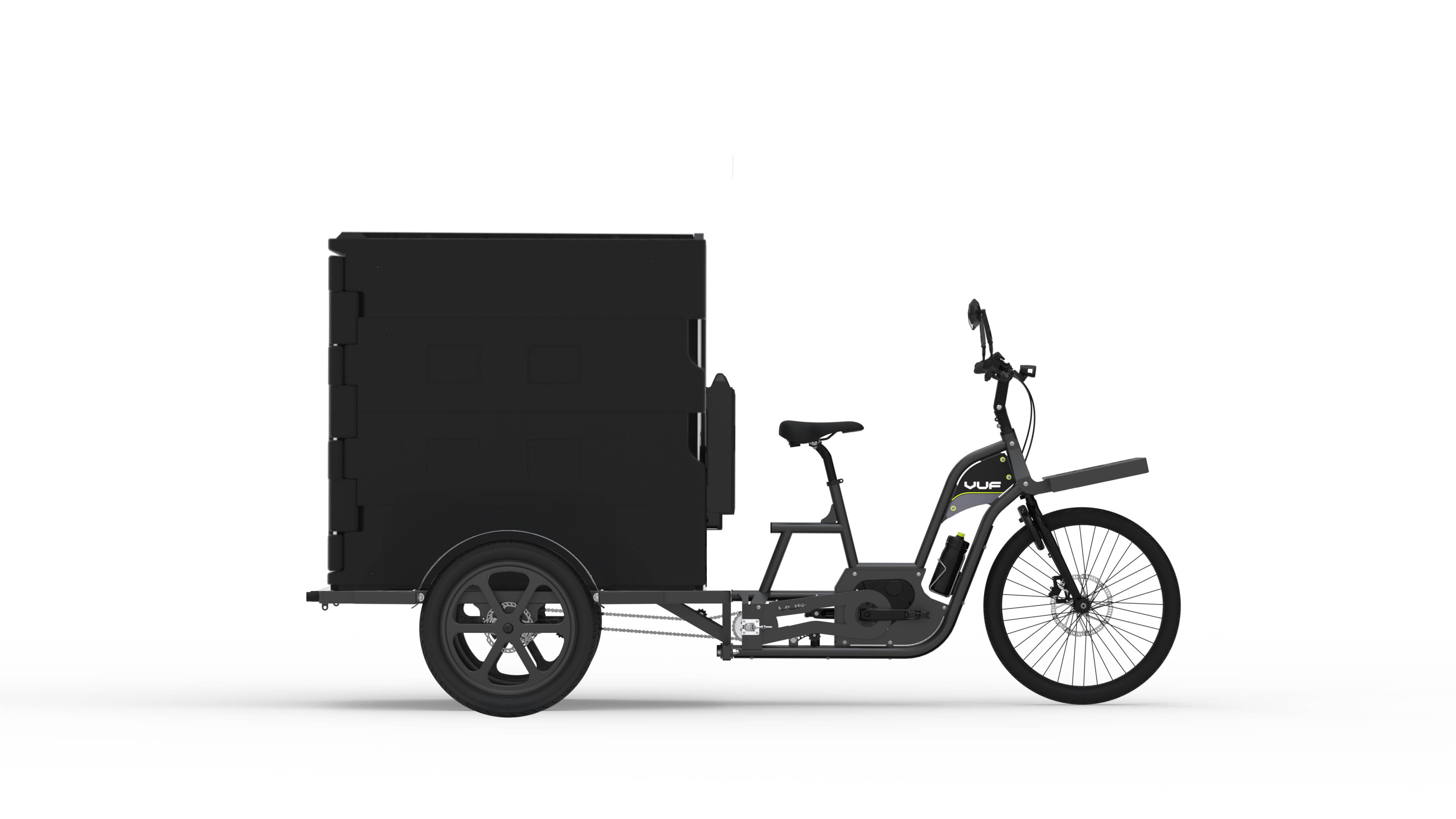
XXL MAX PASSIVE COLD
Professional electric cargo trike with passive-cold insulated box — VUF Bikes
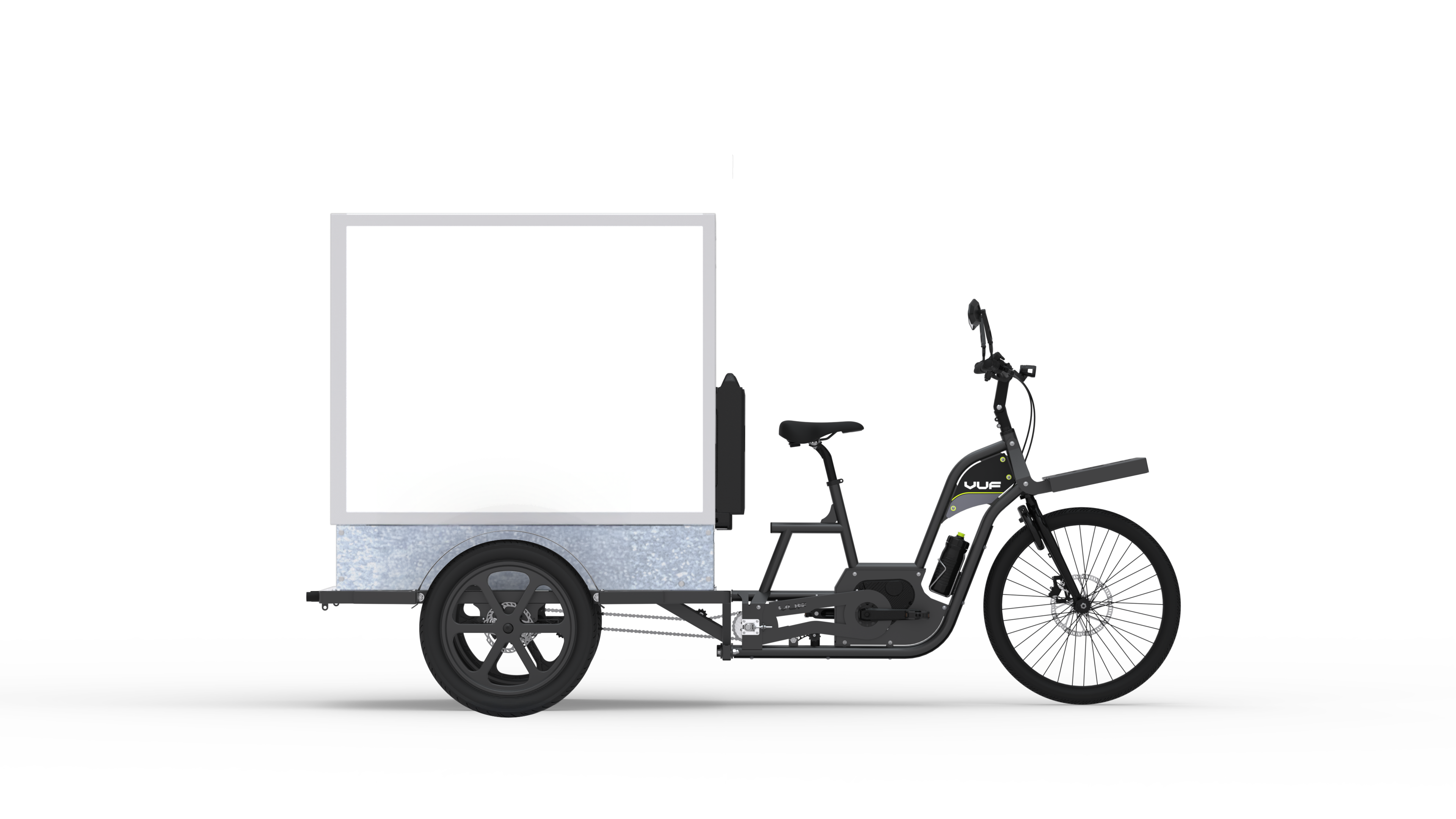
XXL MAX ACTIVE COLD
Professional electric cargo trike with active-cold insulated box — VUF Bikes
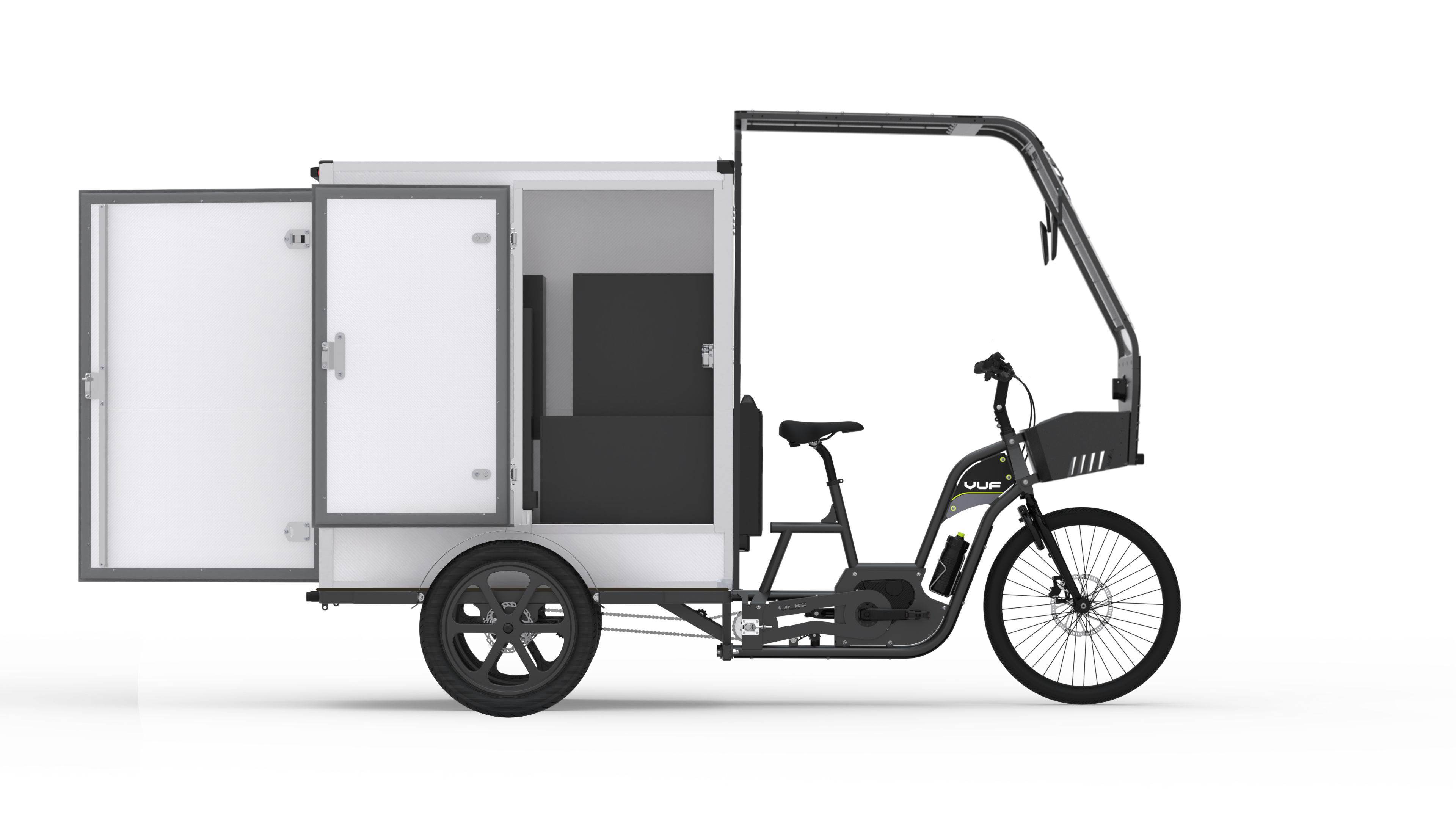
user feedback:
The VUF XXL MAX Active Cold is the first 100% carbon-free, silent and robust cold electric scooter.


Refrigerated cargo bike : for what uses?
1. Meal delivery service
Our refrigerated cargo bike answers one of the major problems in meal delivery services, namely the respect for the cold chain.
Our tricycle is therefore adapted to the various meal delivery services. Whether it's home meal delivery or special events... The VUF Active Cold provides access to neighborhoods densely populated cities, where a conventional commercial vehicle should have Difficult to access.
The compact size of the e-trike (1.1 meters in width) allows it to circulate easily in narrow streets while guaranteeing the quality of the products transported: fruit, dairy products, fresh products...
2. Local business supplies
Local businesses are not always easy to access for conventional commercial vehicles.
Indeed, conventional commercial vehicles are often required to disrupt traffic, because despite the difficulties of accessibility, they must still park in order to Guarantee delivery at local businesses.
The problem is that they very often generate negative externalities for road users (annoying parking, traffic disturbance, interference with bike paths...)
Our refrigerated cargo bike are ideal for ensuring the supply of small local businesses (neighborhood grocery stores, farmers' markets, specialized points of sale...)
Their flexibility allows suppliers to adapt to the changing needs of these businesses while maintaining the cold chain for various products: from meat to dairy products to fruits & vegetables.
How to transport cold goods by electric cargo trike?
Transporting food, even by cargo bike, is subject to strict health standards to guarantee product safety and consumer health.
The cold chain must be maintained without interruption:
- Chilled products: between 0 and 4°C
- Frozen products: below -18°C
Any break in temperature creates a risk of contamination and can lead to the destruction of the goods concerned.
Vehicles and containers must be:
- Clean, disinfected and suitable for food contact
- Designed to preserve temperature and prevent heat transfer
- Organized to ensure strict separation between food and non-food products
The ATP certificate (Agreement on the International Carriage of Perishable Foodstuffs) is mandatory for the international transport of food products.
It certifies that the vehicle or refrigerated box complies with construction and temperature-maintenance standards.
The ATP marking specifies the vehicle's insulation class and thermal capacity.
For domestic transport, this compliance is not always mandatory, but it is often requested by professional customers or for certain sensitive sectors.

VUF Bikes Catalog
frequently asked questions
With our active refrigeration solution, the cold is guaranteed for 8 hours in ATP autonomy and up to 12 hours with 40 door openings.
Yes, we offer the possibility of customizing your e-trikes with the color of your choice for any order of more than 5 bikes. By default, our cargo bikes are matt black.
The VUF M differs from other models by its width of 90 cm. It is versatile, ideal for the delivery of packages and letters, and its small size makes it versatile.
To choose the box adapted to your business, identify your transport needs: volumes, types of goods, delivery conditions. Opt for a waterproof and sturdy box for sensitive goods or a ventilated box for waste collection.
To choose between active refrigeration and passive refrigeration transport, consider travel time and temperature maintenance regulations. Active refrigeration, with its integrated refrigeration system, is ideal for long trips and to comply with strict temperature maintenance regulations. Passive refrigeration, using cold accumulators, is suitable for short trips and when regulations are less stringent.
